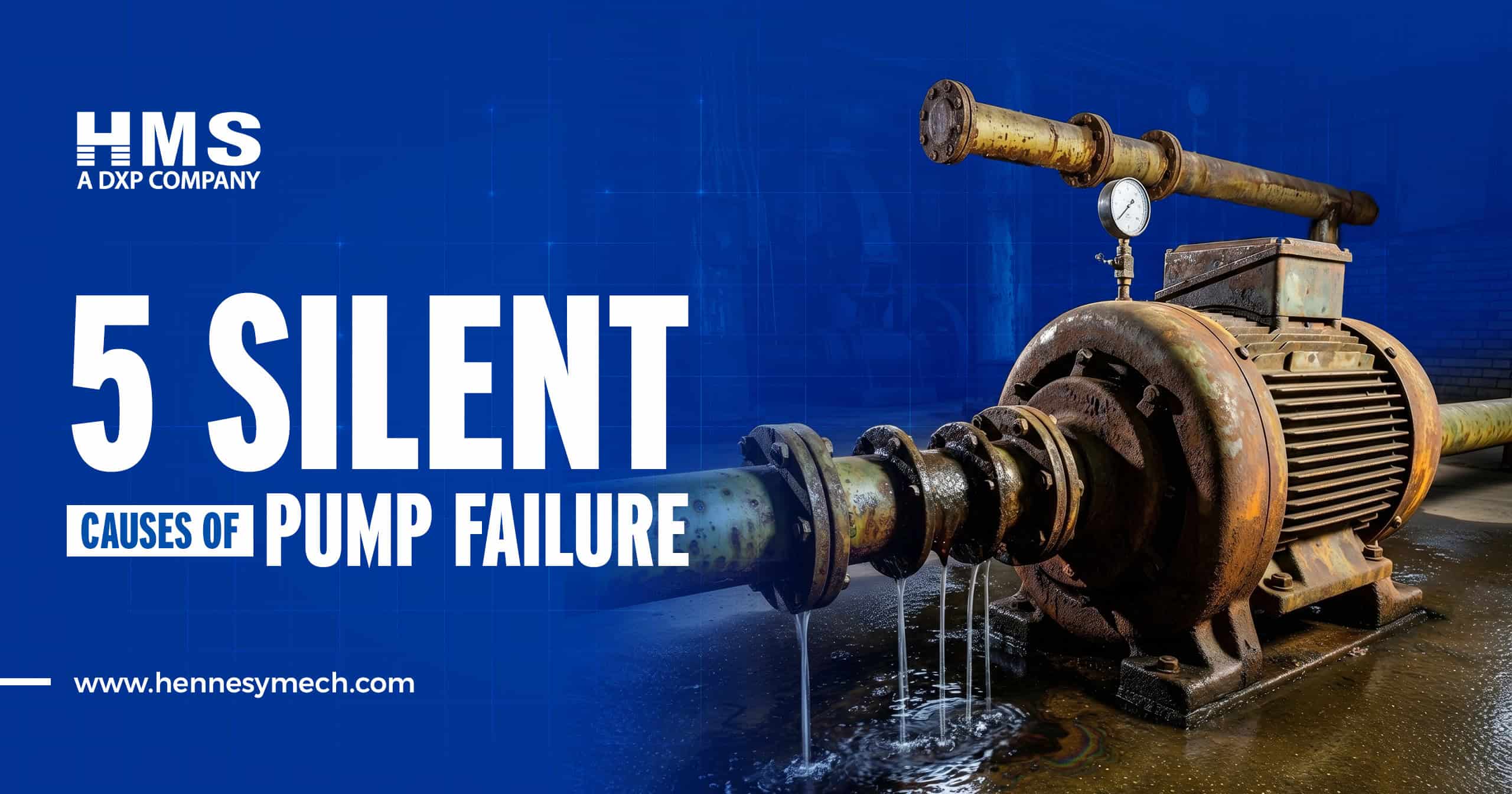
Industrial pump failures rarely happen without cause. In most cases, recurring issues can be traced back to a small number of root problems that develop over time. Identifying these causes early allows maintenance teams to correct them before they lead to major damage or unplanned downtime.
At DXP Hennesy, we regularly help facilities diagnose pump failures and implement solutions that improve long-term reliability. Understanding the most common failure points is the first step toward preventing them.
Common Causes of Pump Failure
While each application is different, most pump failures fall into a handful of categories that affect mechanical condition and system performance.
Key causes of pump failure include:
- Misalignment between pump and motor, which increases vibration and accelerates wear
- Mechanical seal wear, often caused by improper selection or operating conditions
- Contamination from debris or fluid impurities that damage internal components
- Cavitation due to inadequate suction conditions or improper system design
- Operating outside the best efficiency point, leading to stress and overheating
These issues may develop independently or combine to create more complex problems. Addressing them requires both proper diagnosis and corrective action.
Misalignment and Vibration
Misalignment is one of the most frequent contributors to pump failure. Even small deviations between the pump and motor shafts can create additional forces that stress bearings, seals and couplings. Over time, this leads to increased vibration and premature component wear.
Preventing misalignment starts with proper installation and precision alignment techniques. Regular checks help ensure alignment remains within acceptable limits, especially after maintenance or system changes.
Mechanical Seal Wear
Mechanical seals are critical for preventing leakage and maintaining safe operation. Seal failure is often caused by improper material selection, dry running or operating conditions that exceed design limits.
Selecting the right seal for the fluid and operating environment is essential. Proper installation and monitoring also play a key role in extending seal life. When failures occur, understanding the root cause helps prevent repeated issues.
Contamination and Internal Damage
Contamination is another major factor in pump failure. Solids, debris or chemical impurities can damage impellers, wear rings and other internal components. Even small amounts of contamination can disrupt flow and reduce efficiency.
Maintaining clean fluid conditions, installing proper filtration and monitoring system inputs help minimize contamination risks. Regular inspection allows teams to detect early signs of internal wear before damage becomes severe.
Cavitation and Suction Issues
Cavitation occurs when pressure at the pump suction drops below the fluid’s vapor pressure, causing vapor bubbles to form and collapse inside the pump. This process creates noise, vibration and surface damage that can quickly degrade performance.
Proper system design is key to preventing cavitation. Ensuring adequate suction pressure, minimizing restrictions and maintaining appropriate operating conditions help protect the pump from this type of damage.
Operating Outside Design Conditions
Pumps perform best when operating near their best efficiency point. Running too far above or below this range increases internal stress, reduces efficiency and accelerates wear. This often happens when systems are designed for a single condition but operate under variable demand.
Using appropriate control strategies, such as variable speed operation or proper pump selection, helps maintain performance within the optimal range.
Turning Troubleshooting Into Prevention
Preventing pump failure requires more than reacting to issues as they occur. It involves understanding how the system operates and identifying conditions that lead to wear over time. Monitoring vibration, temperature and performance trends provides valuable insight into equipment health.
DXP Hennesy supports facilities with diagnostics, alignment services, seal selection and system evaluations that address root causes rather than symptoms. By taking a proactive approach, operators can reduce downtime, extend equipment life and improve overall reliability.