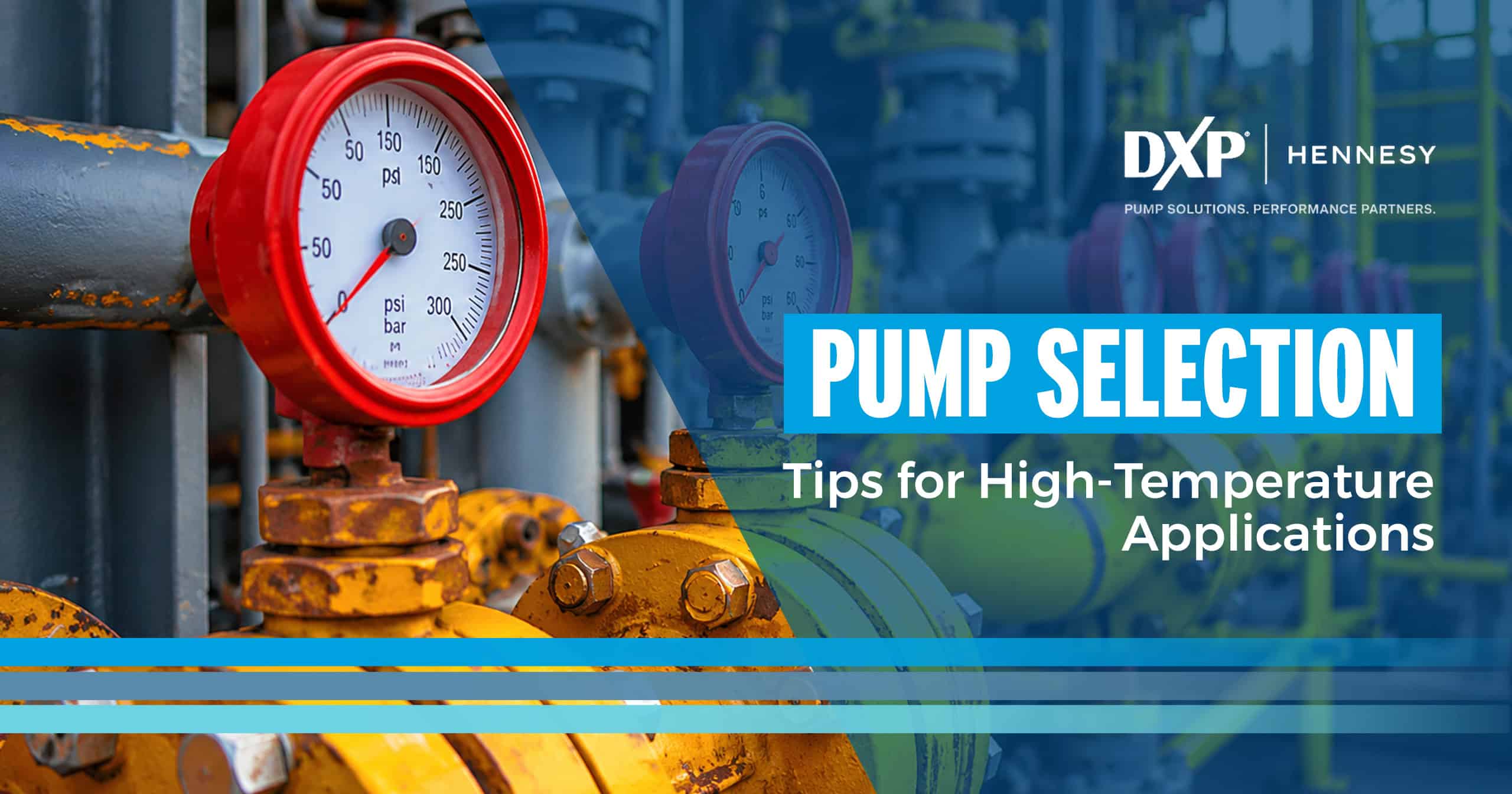
High-temperature applications present unique challenges for industrial pump systems. Whether handling hot water, thermal oils, chemicals or other process fluids, elevated temperatures place additional stress on pumps, seals, bearings and supporting components. Selecting the wrong equipment can lead to premature failures, safety concerns and costly downtime.
Successful pump selection for high-temperature service requires more than choosing a pump that can withstand the heat. The entire system must be designed to accommodate changing fluid properties, thermal expansion and operating conditions. At DXP Hennesy, we work with customers to develop pump solutions that maintain reliability while operating safely under demanding thermal conditions.
Understanding the Effects of Temperature
As fluid temperatures increase, pump operating conditions change significantly. Higher temperatures reduce fluid viscosity, alter vapor pressure and can affect the way the pump develops pressure and flow. In many applications, these changes increase the likelihood of cavitation if suction conditions are not properly managed.
Heat also affects the pump itself. Metal components expand as temperatures rise, changing internal clearances that influence hydraulic performance. Bearings, seals and elastomers experience greater thermal stress, making proper material selection essential for long-term reliability.
Because these factors interact throughout the system, evaluating temperature effects early in the design process helps prevent performance issues later.
Selecting the Right Materials
Material compatibility becomes increasingly important as operating temperatures rise. Components that perform well under normal conditions may lose strength or experience accelerated wear when exposed to continuous high temperatures.
Pump casings, impellers and shafts must be constructed from materials capable of maintaining their mechanical properties throughout the expected operating range. Mechanical seal components also require careful selection, particularly seal faces and elastomers that must withstand both heat and the process fluid.
In some applications, specialized alloys or upgraded sealing materials provide longer service life and improved reliability under severe operating conditions.
Mechanical Seals and Cooling Considerations
Mechanical seals are often among the most temperature-sensitive components in a pump system. Elevated temperatures increase friction at the seal faces while reducing the effectiveness of some elastomer materials.
Seal support systems may be required to provide cooling or lubrication that helps maintain stable operating temperatures. Depending on the application, external flush systems or barrier fluid arrangements can significantly improve seal life and reduce the risk of leakage.
Cooling requirements extend beyond seals. Bearings and other rotating components may also require additional consideration to ensure temperatures remain within acceptable operating limits.
System Design Matters
Pump reliability in high-temperature applications depends on more than the pump itself. Suction piping should minimize pressure losses to help maintain adequate Net Positive Suction Head and reduce cavitation risk. Proper insulation may be necessary to maintain process temperatures while protecting surrounding equipment and personnel.
Variable frequency drives can also improve performance by allowing pumps to adjust gradually during startup and respond to changing process demands. Controlled acceleration reduces thermal shock while helping maintain stable operating conditions.
Instrumentation plays an important role as well. Monitoring temperature, vibration and pressure provides valuable insight into equipment health and allows maintenance teams to identify developing issues before failures occur.
Supporting Safe and Reliable Operation
High-temperature pump applications demand careful engineering, appropriate materials and attention to the entire system. When these factors are addressed together, facilities benefit from improved reliability, reduced maintenance and safer operation.
DXP Hennesy helps customers evaluate operating conditions, select appropriate equipment and design pump systems that perform reliably in demanding thermal environments. Through application engineering, field support and ongoing technical expertise, we help facilities protect both equipment and production.
If your operation handles high-temperature fluids, contact DXP Hennesy to discuss pump solutions designed for safe, efficient and reliable performance.