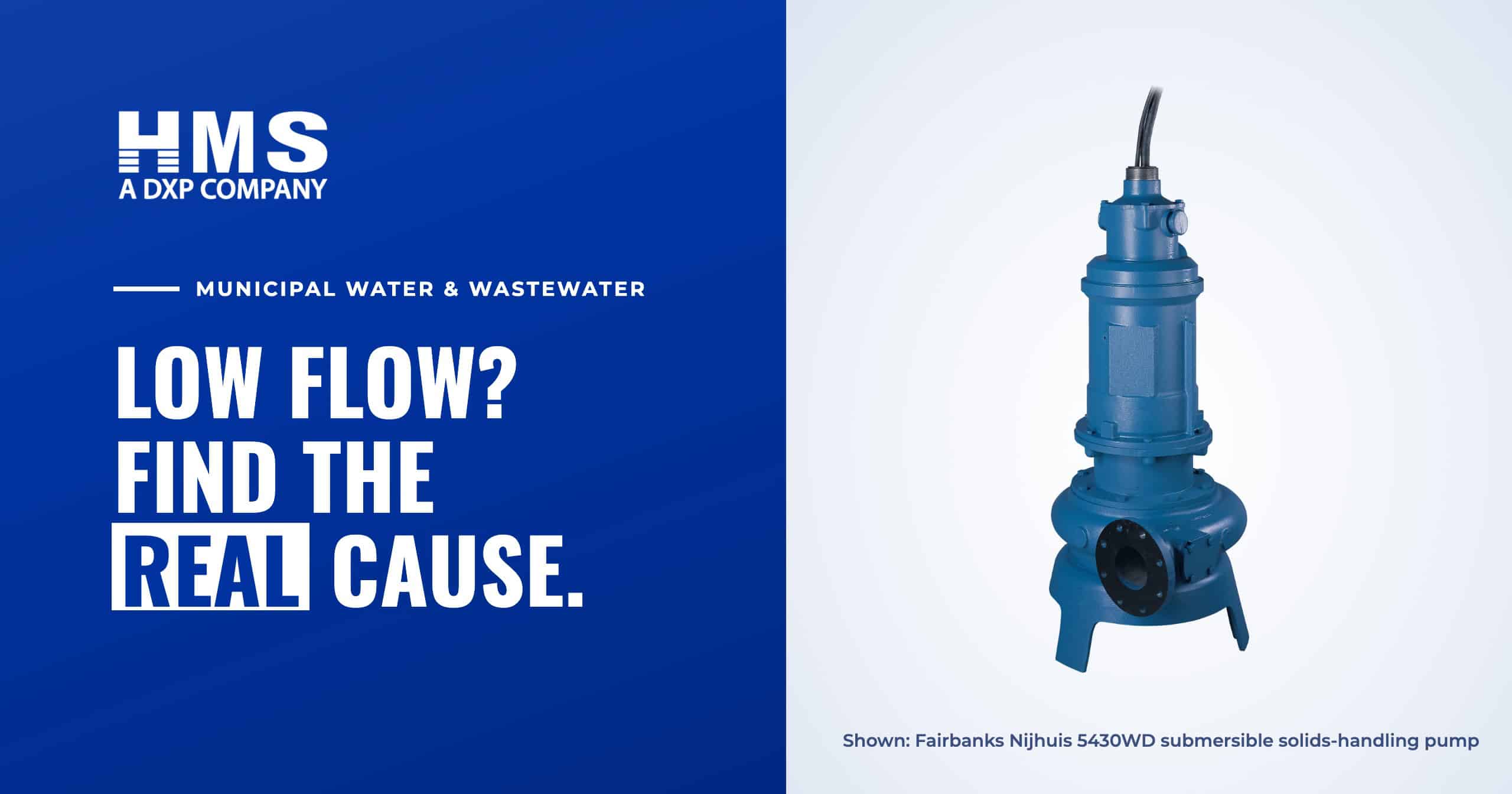
When a well pump, booster station or lift station starts delivering less flow than it should, the cause is not always obvious. Reduced flow can start inside the pump, somewhere else in the system or with a change in operating conditions. For municipal water and wastewater utilities, guessing wrong carries a real cost. Replacing components before the root cause is found spends capital budget without fixing the problem, and the station keeps underperforming while customers and regulators wait.
A systematic troubleshooting process helps operators narrow the possibilities quickly. By comparing current conditions with expected performance, utility crews can identify the actual issue and choose the right corrective action the first time.
Confirm That Flow Has Actually Changed
Before troubleshooting the pump, confirm that the reported drop in flow is real. A drifting flow meter or a failing pressure transmitter can make a healthy pump look like it is underperforming, and instrument calibration is easy to fall behind on across dozens of remote sites.
Most utilities already have the data needed to check. SCADA trends for flow, suction and discharge pressure, motor amps and run times show whether the pump’s operating point has shifted, and when. Compare current readings with historical data from the same station, and confirm valve positions in the field.
If the instruments check out and flow is genuinely low, the next step is figuring out whether the restriction is before, within or after the pump.
Check the Suction Side
Poor suction conditions are one of the most common causes of reduced output. A clogged intake screen, a partially closed isolation valve or an obstructed suction line can starve the pump.
Source conditions matter just as much. In groundwater wells, a falling static water level or increased drawdown can reduce the submergence a vertical turbine pump needs. At lift stations, wet well levels and pump-off set points affect how much liquid the pump actually sees.
Air entering the suction side can create similar symptoms. Loose fittings, worn seals or vortexing in a wet well can draw air into the pump, disrupting flow and contributing to cavitation. Unusual noise or vibration is often the first clue that the pump is not receiving enough liquid.
Inspect the Pump for Wear or Blockage
If suction conditions look normal, the problem may be inside the pump. Worn impellers and opened-up wear ring clearances reduce hydraulic efficiency, so the pump keeps drawing power without producing its original flow. In water with sand or grit, which is common in Arizona groundwater, this wear can build steadily.
In wastewater service, blockage is a frequent culprit. Rags, wipes and other debris can bind impeller passages and reduce capacity long before a pump fully clogs. Scale and mineral deposits can also narrow internal flow paths over time.
Comparing current performance with the manufacturer’s pump curve helps show whether the equipment is still operating as designed. A field performance test or inspection can then confirm whether wear or blockage is responsible.
Evaluate the Discharge System
Changes downstream of the pump can also cut flow. A partially closed discharge valve, a sticking check valve or air trapped at high points in a force main can increase system resistance. So can tuberculation or buildup inside older distribution or discharge piping.
System changes over the years matter too. New connections, pressure zone changes, added piping or upgraded treatment equipment can all raise the head the pump has to overcome. Even when the pump itself is in good condition, these changes can push its operating point back on the curve and reduce delivered flow.
Consider Speed, Controls and Motor Performance
Pump speed directly affects performance. If a variable frequency drive is running at a lower speed than intended, because of a control set point, a SCADA logic change or a drive fault, the pump may simply be turning too slowly to meet demand.
Electrical and motor issues can produce similar results. Checking drive settings, control logic and motor condition rules these factors out before anyone pulls a pump for mechanical repair.
Find the Cause Before Replacing the Pump
Low flow should be treated as a system problem until the actual cause is found. Instrument error, suction restrictions, internal wear, discharge changes and control settings can all produce the same symptoms while requiring very different fixes.
A structured troubleshooting process helps utilities avoid unnecessary repairs, protect capital budgets and get stations back to reliable service sooner. DXP Hennesy has served Arizona customers since 1986 and can help evaluate pump performance and system conditions to determine what is limiting output.
If your utility is dealing with persistent low flow at a well, booster or lift station, contact DXP Hennesy at (602) 996-3444 or sales@hennesymech.com for troubleshooting support and pump system expertise.