Choosing a pump for a municipal well, booster station or lift station involves more than meeting flow and pressure requirements. The physical configuration of the pump also shapes how the station is built, how crews maintain it and how reliably it serves the community for decades. Horizontal and vertical pumps can often meet the same hydraulic requirements, but each design fits certain sites and services better than others.
At DXP Hennesy, pump configuration is evaluated as part of the complete application. Understanding the differences between horizontal and vertical designs helps utilities choose equipment that performs reliably, fits the site and keeps long-term maintenance manageable.
Understanding Horizontal Pump Configurations
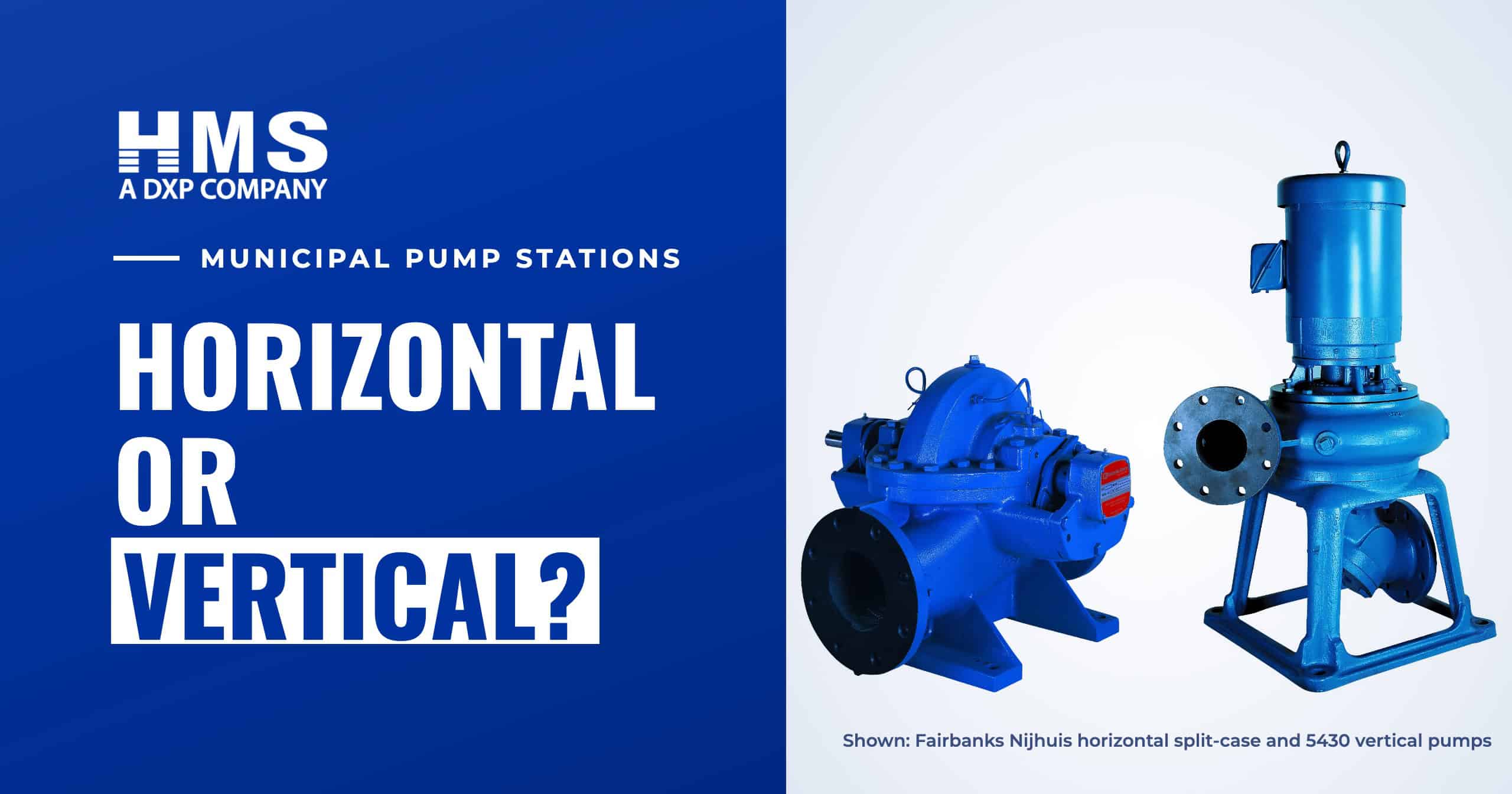
Horizontal pumps position the shaft parallel to the ground, with the pump and motor typically mounted side by side on a common baseplate. End-suction and horizontal split-case pumps are a familiar sight in booster stations, treatment plant process areas and high-service pump rooms.
The main advantage of a horizontal configuration is access. Bearings, seals and couplings are generally easy to reach at floor level. Split-case designs allow crews to inspect the rotating assembly without disturbing suction and discharge piping, which can shorten maintenance outages and reduce the need for cranes or specialty rigging.
Horizontal designs also come in a wide range of sizes and types, which makes them adaptable to many flow and pressure conditions across a distribution system.
The main limitation is space. A horizontal pump and motor take up more floor area than most vertical arrangements. In an existing pump house or a station on a tight municipal parcel, fitting additional or larger horizontal units can be difficult.
Suction conditions also need careful attention. Depending on the layout, additional suction piping may be needed to deliver stable, well-distributed flow to the pump inlet.
Where Vertical Pumps Offer Advantages
Vertical pumps orient the shaft vertically, using far less floor space. They are especially useful when the site is constrained or when the water source sits below the pump station.
Vertical turbine pumps are the standard choice for groundwater wells, which supply a large share of Arizona’s drinking water. Vertical designs are also common in wet wells, intake structures, reservoirs and can-type booster applications where water must be lifted from a lower elevation.
Placing the pumping element close to or directly in the water source can improve suction conditions and reduce the problems associated with suction lift.
Vertical pumps do bring different maintenance considerations. Bearings and other components may be less accessible, and pulling a column and bowl assembly typically requires a crane or pump hoist with enough overhead clearance. Stations should be planned so that access, rigging and crew safety are accounted for from the start. Installation also requires careful attention to foundation support and alignment for reliable operation.
Matching Configuration to the Application
Neither configuration is better across the board. The right choice depends on how the equipment will work within the station and the larger system.
Available space is an obvious factor, but maintenance access deserves equal weight. A compact station provides little benefit if crews cannot safely reach the equipment or remove it for service.
The water source often points toward a configuration. Wells, wet wells and below-grade reservoirs naturally favor vertical equipment, while many above-ground booster and treatment plant applications are well suited to horizontal pumps.
Utilities should also consider redundancy requirements, expected maintenance intervals, surrounding piping and future capacity. Weighing these factors during design helps prevent installation compromises that lead to reliability problems and unplanned costs later.
Making Pump Configuration Part of Station Design
Pump configuration should be considered alongside hydraulic performance, not after a pump has been selected. The best solution meets system demands while supporting practical installation, safe maintenance and predictable lifecycle costs.
DXP Hennesy has served Arizona customers since 1986. Our team works with utilities and their engineers to evaluate operating conditions and site requirements before recommending equipment, so each station gets the configuration that best fits its service.
If your utility is planning a new pump station, rehabilitating a well or replacing existing equipment, contact DXP Hennesy at (602) 996-3444 or sales@hennesymech.com to discuss a pump configuration built around your performance, space and reliability requirements.