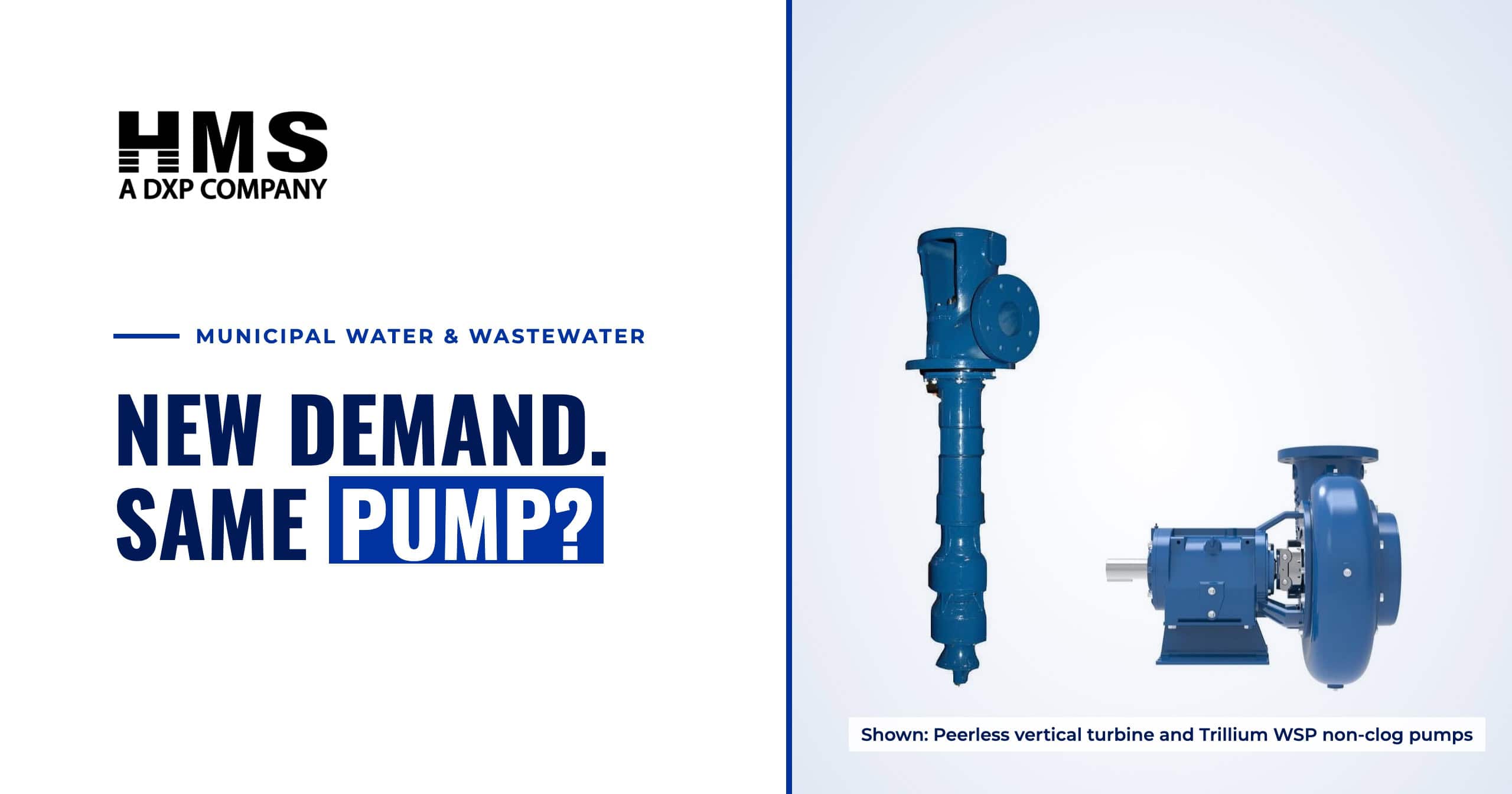
Most pumps at a municipal well, booster station or lift station were selected for the conditions on the day the station was designed: a target flow, a calculated head and the water or wastewater the utility expected to move. Utility systems rarely stay that way. New subdivisions come online, force mains get extended, piping is rerouted around new development and treatment processes are upgraded.
Each of those changes can improve how the system serves the community. Each can also shift the demands placed on pumps that were never reevaluated. When that happens, the result is usually not a sudden failure but a slow slide in efficiency and reliability that shows up later as higher power bills, repeat seal replacements and unplanned work orders.
Understanding how system changes affect pump operation helps operators and utility engineers keep stations efficient and avoid unnecessary wear.
When Demand Changes, the Operating Point Moves
A pump selected for a specific flow rate may run less efficiently when demand changes. Growth is the most common driver. A booster station that once served a few hundred homes may now feed a much larger pressure zone, and a lift station sized for the first phase of a development may see far more inflow once later phases connect.
Demand can also drop. Conservation, changes to operating schedules, a new well or booster sharing the load, or a station sized for full buildout that hasn’t arrived yet can all leave a pump running well below its design flow. Arizona’s seasonal swing between summer peaks and lower winter demand means many stations see both conditions in the same year.
For centrifugal pumps, these shifts move the operating point away from the best efficiency point (BEP). The Hydraulic Institute publishes guidance on preferred and allowable operating ranges for this reason. Running well outside the preferred range increases hydraulic forces and vibration, which can shorten the life of bearings and mechanical seals.
Low flow carries its own risks. When a pump operates below its recommended minimum continuous flow, internal recirculation and heat buildup can develop.
The fix starts with a simple comparison: today’s flow requirements, taken from SCADA trends and run records, against the original pump performance curve. That shows whether the equipment is still sized for the job.
Piping Changes Shift the System Curve
Changes to piping can significantly affect pump operation, even when the pump itself is untouched. Common municipal examples include:
- Extended or new force main — A longer discharge run adds friction loss that the lift station pumps must overcome.
- Rerouted piping — Moving lines around new roads or development often adds length, bends and fittings.
- New valves, meters and equipment — Pressure-reducing valves, flow meters, check valves and new treatment equipment all add resistance.
- New connections to a shared force main — Another station pumping into the same line can change the head each pump sees.
Each of these raises the total dynamic head (TDH) required to move water or wastewater through the system. As resistance rises, a centrifugal pump delivers less flow than intended. The reverse is also true: removing a restriction, such as replacing old piping or opening a bypass, can let flow increase and push the pump beyond its preferred range.
Suction-side changes deserve particular attention. A modified wet well, new suction piping at a booster station or a change in reservoir operating levels can raise inlet losses and reduce the net positive suction head available (NPSHa). That creates conditions for cavitation. Our article on the role of NPSH in pump selection and system design explains the fundamentals.
Whenever a capital project changes the piping around a station, reviewing system hydraulics afterward helps prevent unexpected performance problems.
When What You’re Pumping Changes
Changes in what a pump handles also affect how it performs. In wastewater systems, influent can change over time: more wipes and rags, higher solids loading, new commercial or industrial dischargers, or a plant upgrade that thickens sludge before it reaches the next pump.
Higher viscosity increases flow resistance and can reduce centrifugal pump efficiency. The added power required may exceed what was planned for in the original selection. Our recent article on how viscosity affects pump selection at wastewater plants covers this in more detail.
Changes in density also affect motor power requirements. Abrasive particles, such as sand drawn from a well, can accelerate internal wear. Corrosive contaminants or new treatment chemistry can attack materials that were suitable for the original water. See how water quality impacts pump reliability for more on these effects.
Temperature adds another variable. It changes viscosity and vapor pressure, which affect both hydraulic performance and suction conditions.
Warning Signs a Station Needs Reevaluation
System changes don’t always cause immediate pump failure. Performance often declines gradually, which makes it hard to connect a project completed last year with problems showing up today.
Operators should watch for:
- Changes in flow or discharge pressure on SCADA trends
- Rising motor amps or power consumption for the same work
- Longer run times or more frequent starts at lift stations
- Increasing vibration or noise
- Recurring seal or bearing failures
Comparing current performance with historical operating data helps identify when problems began, and whether that lines up with a system change. A system evaluation can then show whether adjustments or equipment modifications are needed. If a station is already delivering less than it should, our guide to diagnosing low flow at municipal pump stations is a good place to start.
Make Pump Review Part of Every System Change
A pump that ran reliably under its original conditions may not be the best fit for a changed system. Reevaluating equipment after significant changes helps utilities avoid unnecessary energy use and premature wear, and it protects capital budgets from repeat repairs.
The best time to do that review is during planning. When a capital project adds a force main, connects a new development or upgrades a treatment process, including the affected pumps in the scope keeps the station matched to the system it serves.
Work With a Partner Who Knows Your System
DXP Hennesy has served Arizona customers since 1986. Our team works with utilities and their engineers to assess pump performance and system requirements as operating conditions change, so each station keeps running efficiently as the community grows.
If your utility is adding demand, modifying piping or seeing declining pump performance, contact DXP Hennesy at (602) 996-3444 or sales@hennesymech.com to discuss system evaluations and equipment solutions.
Related resources
- Diagnosing Low Flow at Municipal Pump Stations
- Role of NPSH in Pump Selection and System Design
- How Viscosity Affects Pump Selection at Wastewater Plants
- Our Manufacturers
- Contact DXP Hennesy