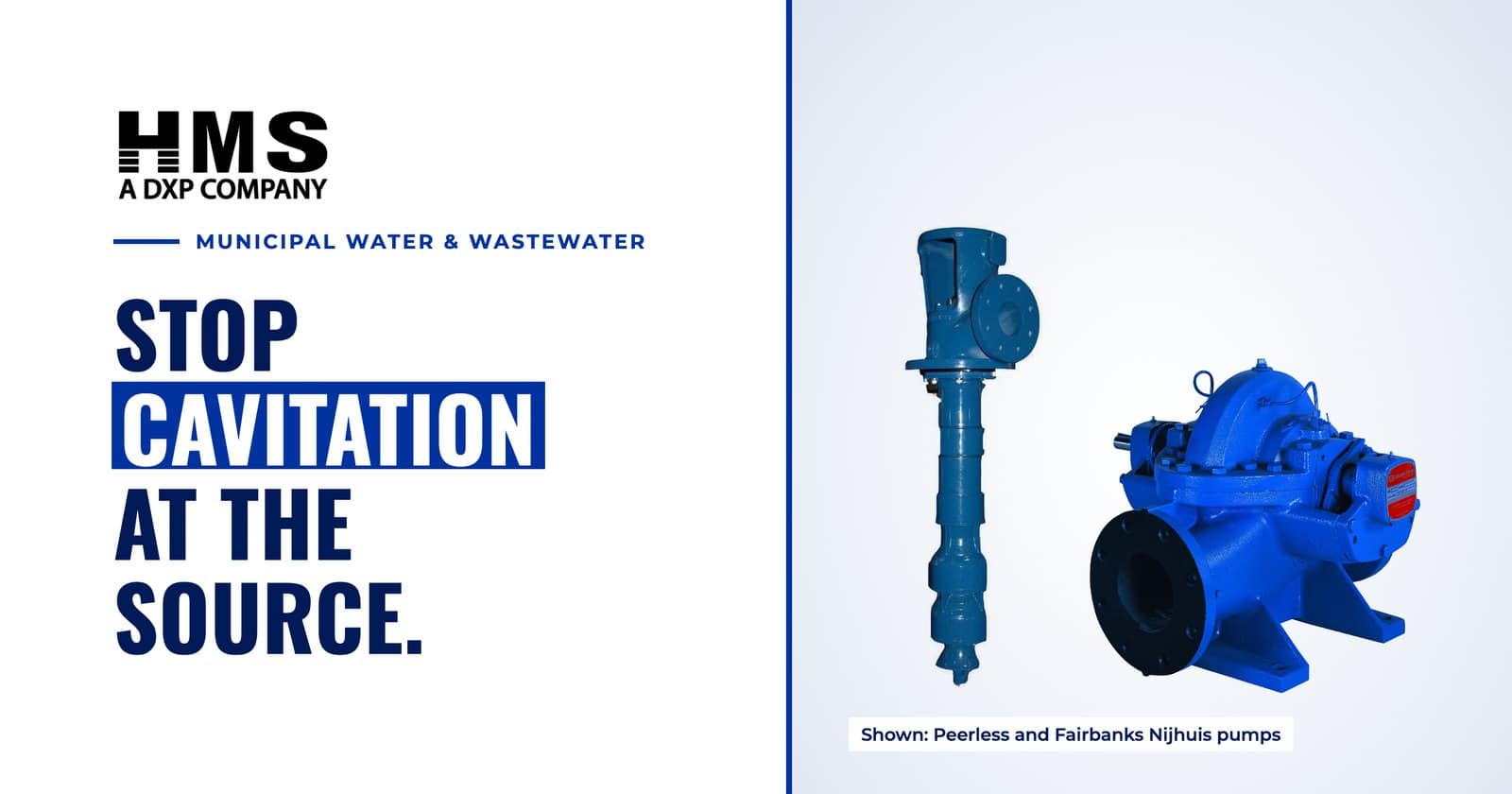
Cavitation is one of the most damaging conditions a pump can run in. At a well, booster station or lift station, it can erode impellers, shake loose bearings and seals and cut station capacity, often long before anyone identifies the cause. Because early symptoms look like other mechanical problems, cavitation can go on for months.
Knowing why cavitation develops helps operators and utility engineers stop it at the source instead of replacing the same parts again.
How Cavitation Develops
Cavitation happens when pressure at the pump inlet drops below the vapor pressure of the water. Small vapor bubbles form, then collapse violently as they move into higher-pressure areas inside the pump. Each collapse delivers a small, sharp impact. Over time, those impacts pit and erode the impeller.
The key measure is net positive suction head. When the suction head available at the station (NPSHa) falls below what the pump requires (NPSHr), cavitation becomes likely. Our article on the role of NPSH in pump selection and system design explains the fundamentals.
Where Cavitation Starts in Municipal Systems
- Well drawdown — As the pumping level drops, a vertical turbine or submersible well pump loses submergence and suction head. Seasonal demand and long-term water table changes both play a part.
- Low wet well levels — Lift station pumps that run down to a very low level can lose suction head and draw in vortices.
- Low suction pressure at boosters — A low reservoir level or a pressure drop in the supply zone reduces the head available at the booster inlet.
- Suction restrictions — Undersized suction piping, extra fittings, partly closed valves and clogged screens or strainers all add losses before water reaches the pump.
- Running at high flow — A pump pushed far right on its curve requires more suction head than at its design point.
Air drawn in through vortices or leaks at the suction can produce similar noise and vibration. Telling the two apart matters, because the fixes are different.
Warning Signs to Watch For
Cavitation is often heard before it is seen. Operators commonly describe it as gravel or marbles moving through the pump. Other signs include:
- Increased vibration at the pump or motor
- Unstable flow or falling discharge pressure on SCADA trends
- Higher power use for the same output
- Pitting or erosion on the impeller during inspection
These symptoms should be investigated together. Replacing a pitted impeller without correcting suction conditions usually leads to the same damage again. If a station is also delivering less than it should, our guide to diagnosing low flow at municipal pump stations can help narrow down the cause.
Preventing Cavitation
Prevention starts with keeping NPSHa comfortably above NPSHr across the full operating range, not just at the design point. In practice, that means:
- Setting wet well and reservoir low-level cutoffs with suction head in mind
- Tracking well pumping levels and setting pumps deep enough for expected drawdown
- Sizing suction piping generously and keeping fittings to a minimum
- Cleaning screens and strainers on a schedule
- Keeping pumps near their best efficiency point, with VFDs or additional pumps where demand varies widely
When system conditions change, such as a lower reservoir operating level, a new well or a rerouted suction line, it is worth rechecking NPSH margins before damage shows up.
Protect Stations From Long-Term Damage
Cavitation should never be accepted as normal operation. Left alone, it damages impellers, adds stress to seals and bearings and leads to repeat repairs and unplanned downtime. Trending vibration, flow and pressure helps catch deteriorating suction conditions early.
Work With a Partner Who Knows Your System
DXP Hennesy has served Arizona customers since 1986. Our team works with utilities and their engineers to evaluate suction conditions and pump selection and to find the root cause of cavitation.
If a well, booster or lift station is showing unusual noise, vibration or lost capacity, contact DXP Hennesy at (602) 996-3444 or sales@hennesymech.com.